For over ten years, the only way I have had of knowing what our solar panels are doing has been an impulse monitor on the generation meter, counting the flashes of its LED. It has always been a bit flaky due to battery changes or loose connections, and there has never been a way to see solar generation alongside the energy used by the rest of the house. This week I have fixed that, by building a small ESPHome sensor which talks directly to the inverter. I am still reeling slightly: with AI assistance, it took under a week from idea to working implementation, and it is a project I would certainly never have attempted otherwise. The result is zeversolar-esphome.
The inverter is a Zeversolar Zeverlution 3680, which has an RS485 port but no Wi-Fi or Ethernet module. It doesn’t speak Modbus; it uses Eversolar’s own master/slave protocol, which nobody has officially documented but which several people have reverse-engineered over the years (credit to eversolar-monitor, Heliograph and others). Manufacturer support for Eversolar/Zeversolar inverters apparently ended in December 2019 when the company went out of business.
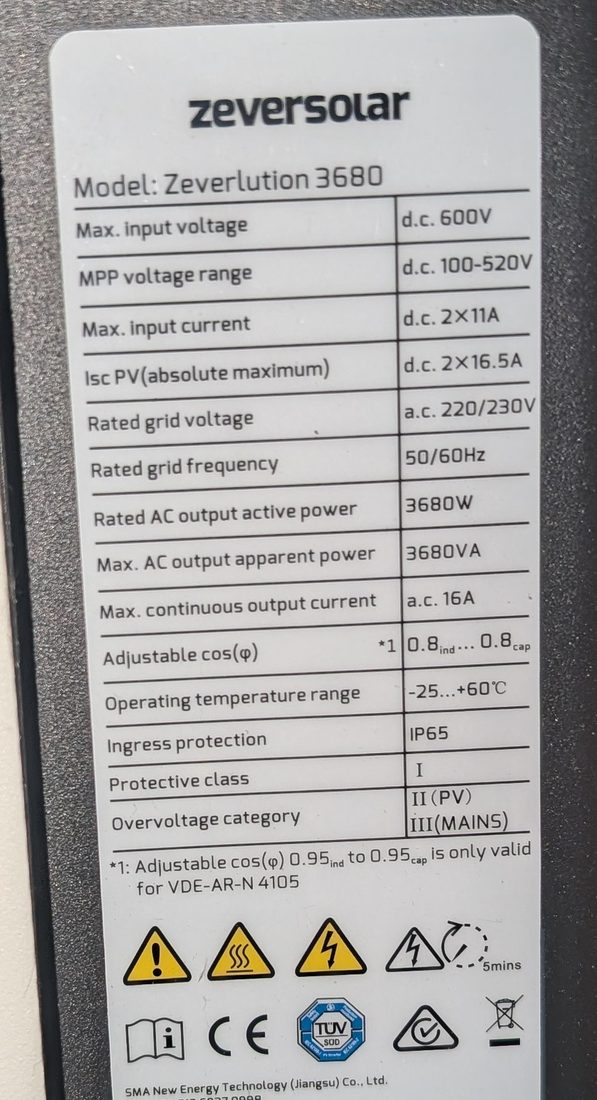
The rating plate on my inverter.
A while ago I had looked into what ports were available on this inverter with a view to connecting some sort of monitoring, but I had abandoned it as “too hard”. While working on some Home Assistant configuration, Claude suggested the idea again, but similarly wrote it off initially. I encouraged it to explore a bit further, and supplied the model number of the inverter, at which point the picture got a lot more promising. After a bit of back-and-forth about hardware, we settled on an M5Stack Atom Lite on an Atomic RS485 Base. The main attraction was that it already comes in a case, so I didn’t need to design (or, more likely, bodge) an enclosure.
While I waited for the parts to arrive, Claude wrote the firmware: an ESPHome external component built around a small, dependency-free C++ driver, with host-side unit tests against byte captures that other people had published from other models. I found it slightly surreal to have a tested protocol driver before owning any hardware to run it on.
Cables
The parts came before the tools I needed to get into the inverter safely (a DC clamp meter and a T25 screwdriver bit), so in the meantime I made up an RS485 cable - this uses an RJ45 connection at one end, and some custom wiring at the other. My first attempt was with some CAT 6, but (as Claude had pointed out and I had ignored) its solid-core conductors are much harder to twist together. So I gave up and sacrificed an old CAT 5e patch lead instead, which went much better.
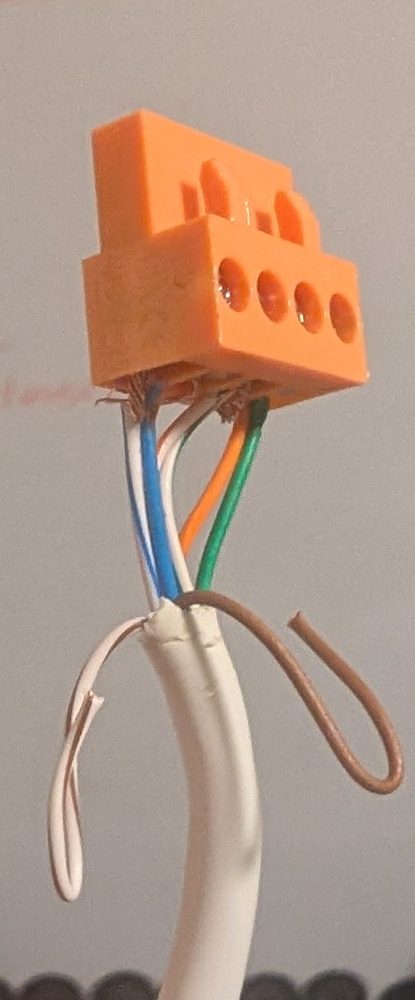
The custom end of the cable, before being taped up.
The risky bit
On a Zeverlution, the RJ45 sockets are inside the wiring compartment, which means taking the cover off to install the monitor. The manual addresses this part to qualified electricians. So the step I was most nervous about was not the software at all, but safely isolating the inverter.
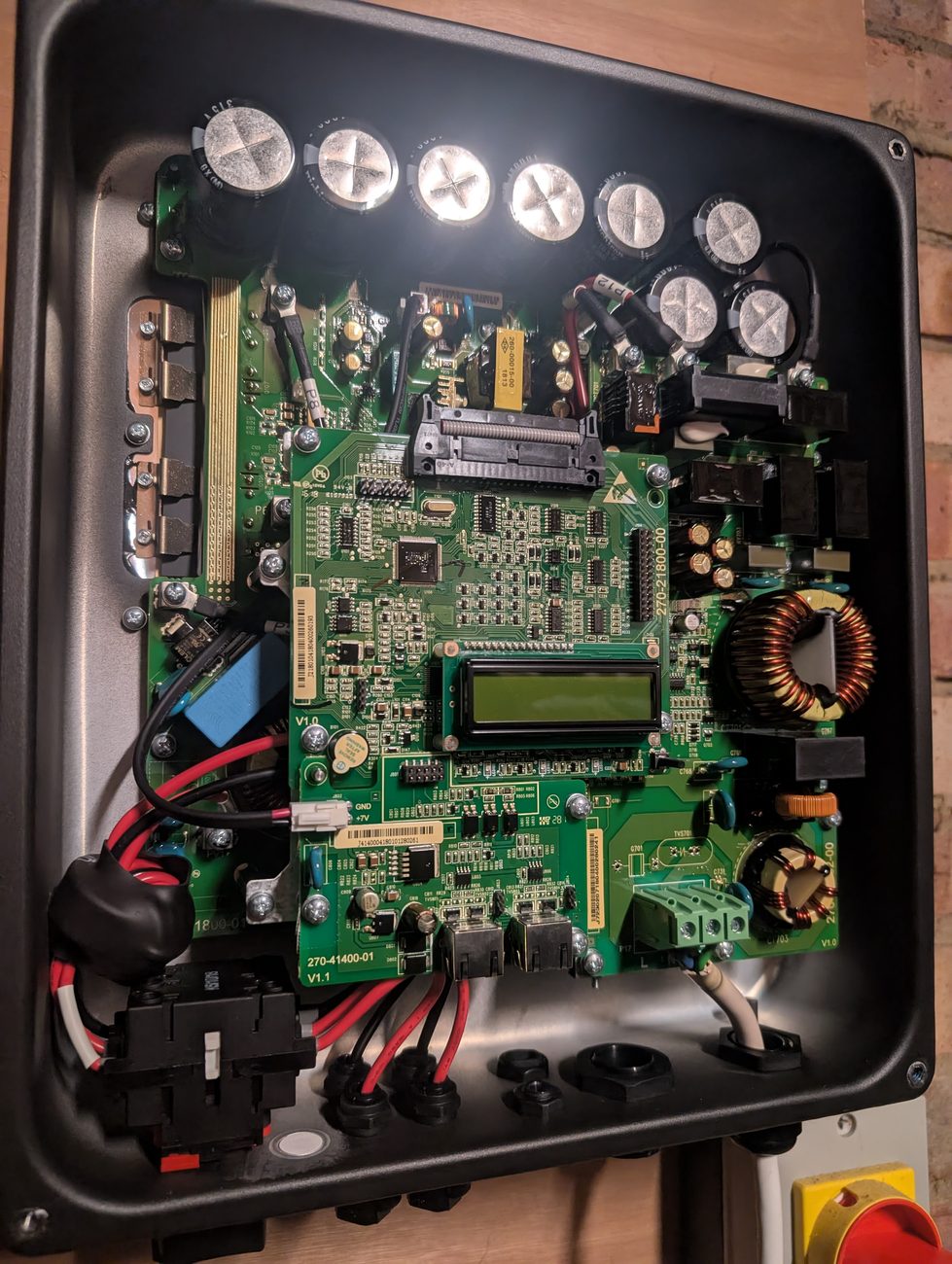
Inside the inverter, with the cover off.
I did this with appropriate caution, following the instructions from the manual carefully, and also waiting until after dark just in case. Now that I understand how the DC clips from the panels work, I can see how to do this safely during daytime too – but hopefully this won’t be necessary.
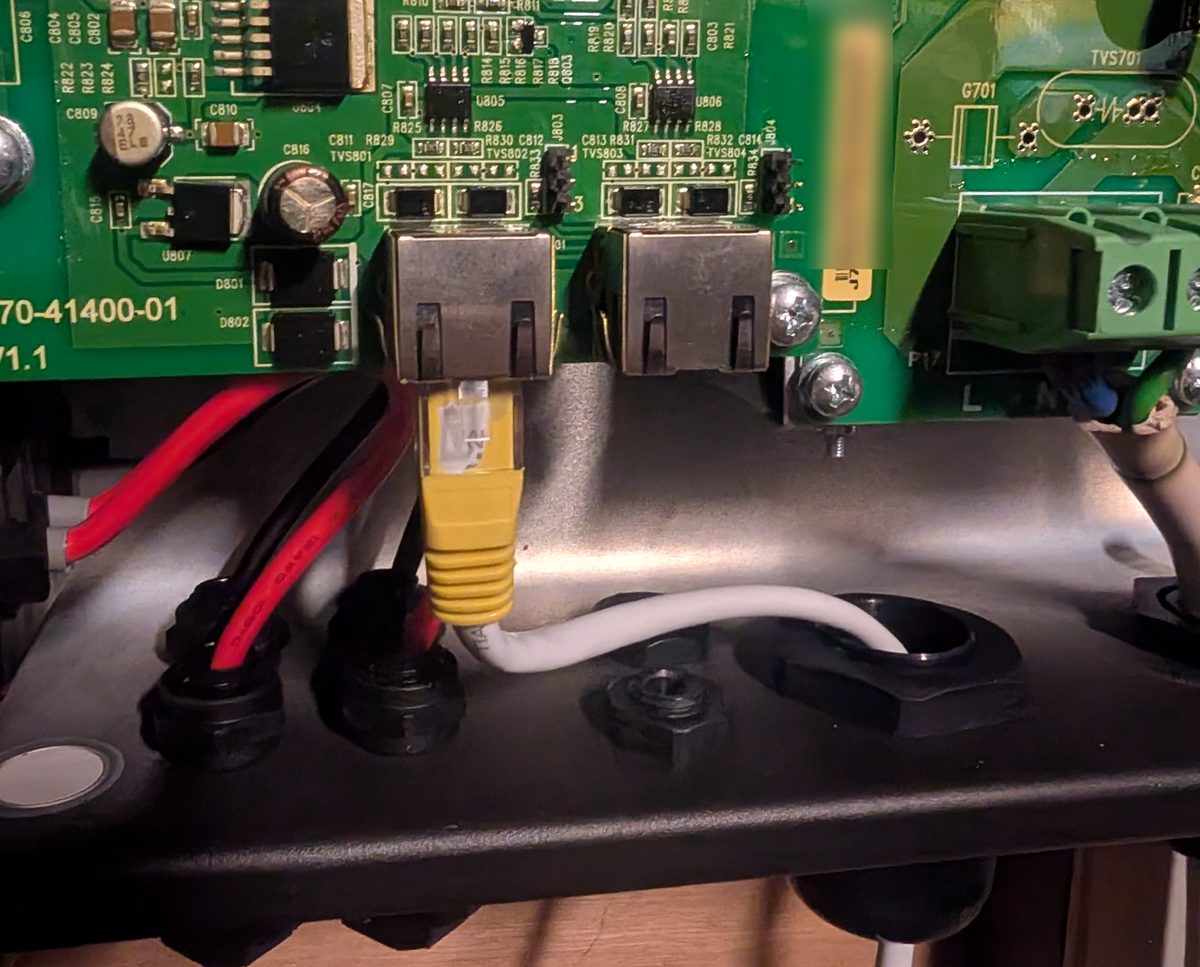
Plugged in, and threaded through the cable gland.
Warning: if you’re not confident, I would always advise to get an electrician to do this bit. Do what I say, not what I do.
Debugging over Wi-Fi
Once the device was installed, the nice thing about ESPHome is that I never need to go back in the loft again to update it – it reflashes over Wi-Fi. I’ve taken full advantage of this for debugging, and for reading the wire protocol directly from the logs.
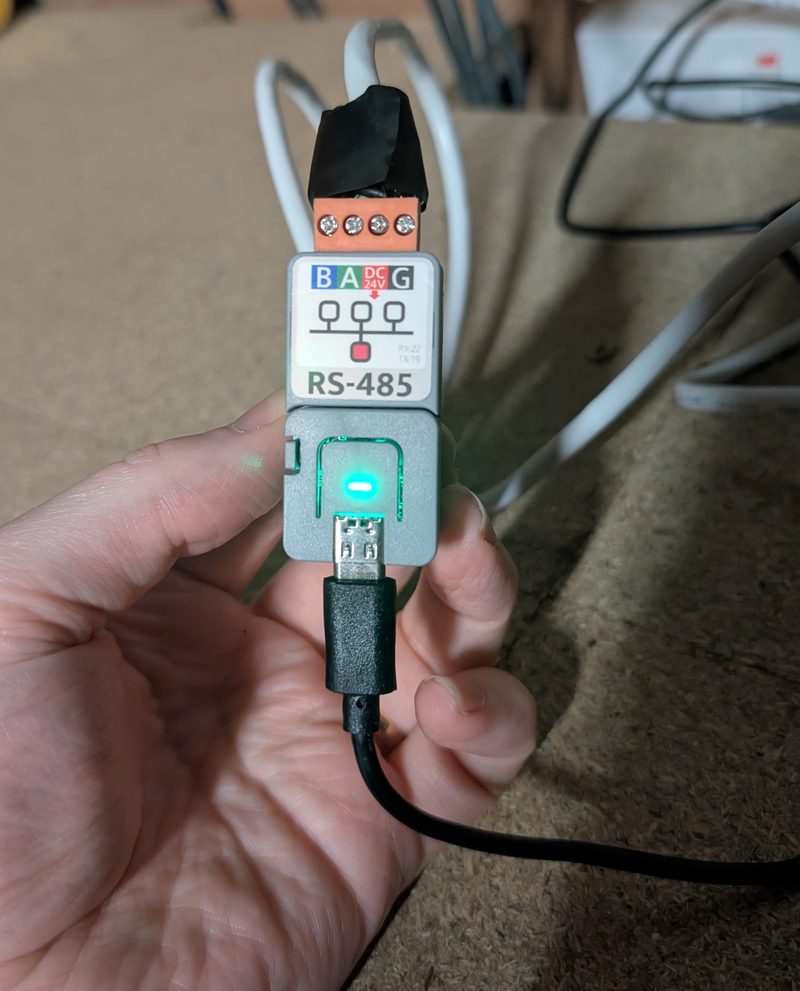
The finished device. Green means generating.
Separately, I’ve used Claude to integrate the new sensors into Home Assistant. Solar generation finally sits in the Energy dashboard next to the rest of the house’s usage, which was the whole point.
Reflections
This was a fun, quick project, and it solved a problem that has eluded me for a decade. I want to be honest about how much of that is down to the AI: I would not have attempted any of this on my own. I could not have told you the protocol existed, never mind implemented it. My contribution was everything involving a screwdriver, and ordering some hardware.